Concrete pool deck contractors in Sanford: a zoning clearance comes before the building permit
The City of Sanford's Inspections Division says it provides permitting and building inspection for Sanford, Broadway and Lee County. Applications are accepted only through the CSS Portal or in person at the Inspections Division. Before that, Sanford's Unified Development Ordinance, in Sec. 3.2.3, asks for a zoning clearance permit from the Department of Community Development and a building permit from the appropriate building inspections department. A zoning clearance expires if 12 months pass without a building permit.
Sec. 8.5.2 adds a step: anyone within the incorporated or unincorporated parts of Lee County who connects to a state road has to submit the NCDOT driveway permit, and no zoning clearance issues until a copy is in. A permit application that isn't paid and issued within 60 days of the invoice date is deemed abandoned, per the Division's expiration page. See our permit guide for how other counties compare.
Mayodan loam over a clayey subsoil: why Sanford isn't Pinehurst sand
The USDA soil survey, checked at 40 random points inside the city, found Mayodan fine sandy loam, or Mayodan-Urban land, at 18. Pinkston silt loam showed at 4, Dothan loamy sand at 3, Tarrus silt loam at 2, Fuquay loamy sand at 2 and Urban land at 2. Six points, 15 percent, landed on floodplain soils named Wehadkee, Chewacla, Congaree and State. Mayodan is well drained, with a clayey subsoil. Chewacla is somewhat poorly drained and frequently flooded.
Compare the leading soil at other towns' map points: Candor sand at Pinehurst and Southern Pines in Moore County, Wagram loamy sand at Fayetteville in Cumberland County, Faceville loamy sand at Raeford in Hoke County, and Fuquay and Norfolk loamy sands at Lillington in Harnett County. All sandy. A clayey subsoil drains more slowly than deep sand, so the base under the slab and the fall away from it matter more here. FEMA's flood layer put 36 of the points in Zone X minimal hazard, 3 in Zone AE and 1 in the 0.2 percent annual chance area. The UDO has a Flood Hazard Area article, and the state flood risk lookup checks your own address.
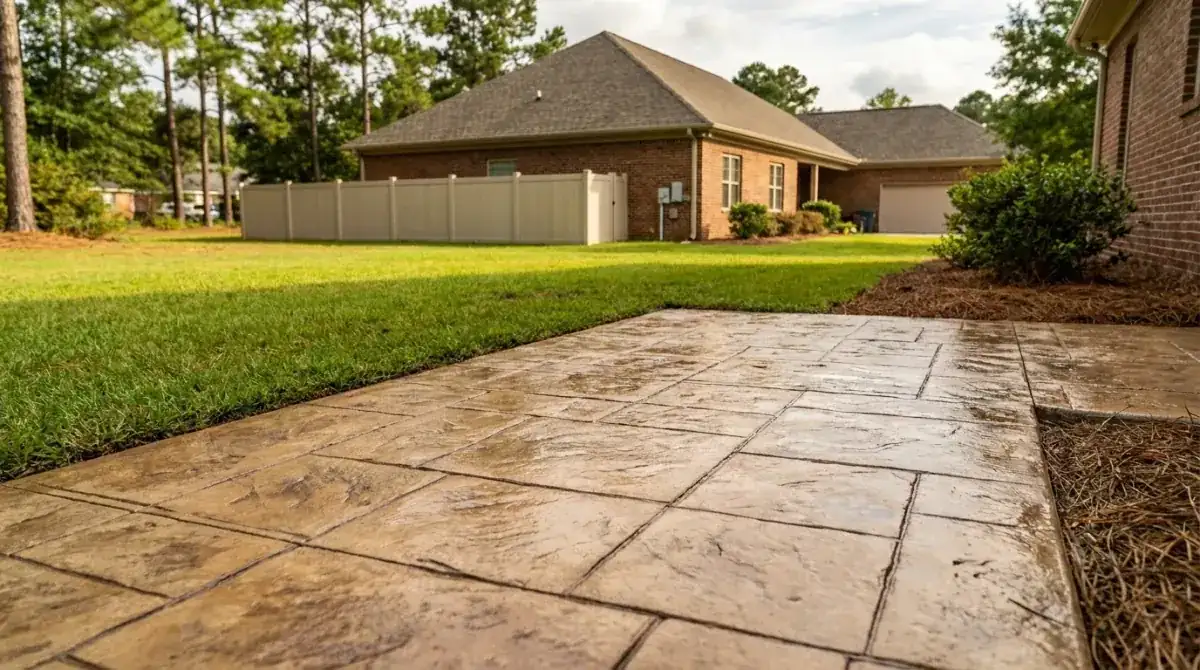
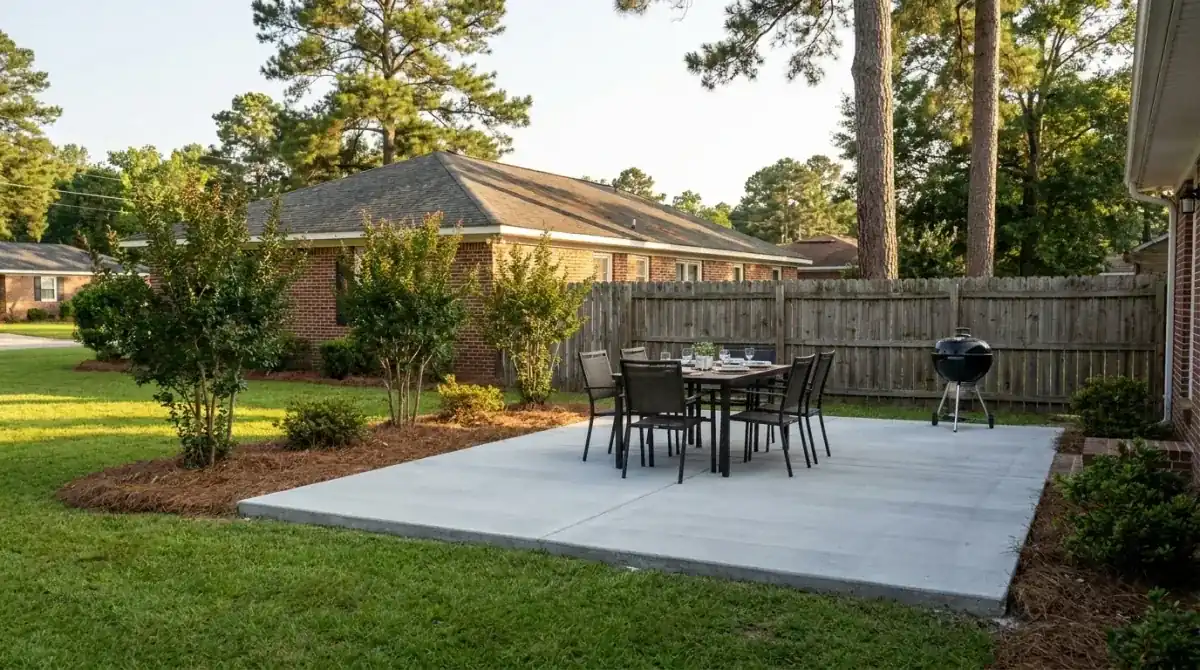
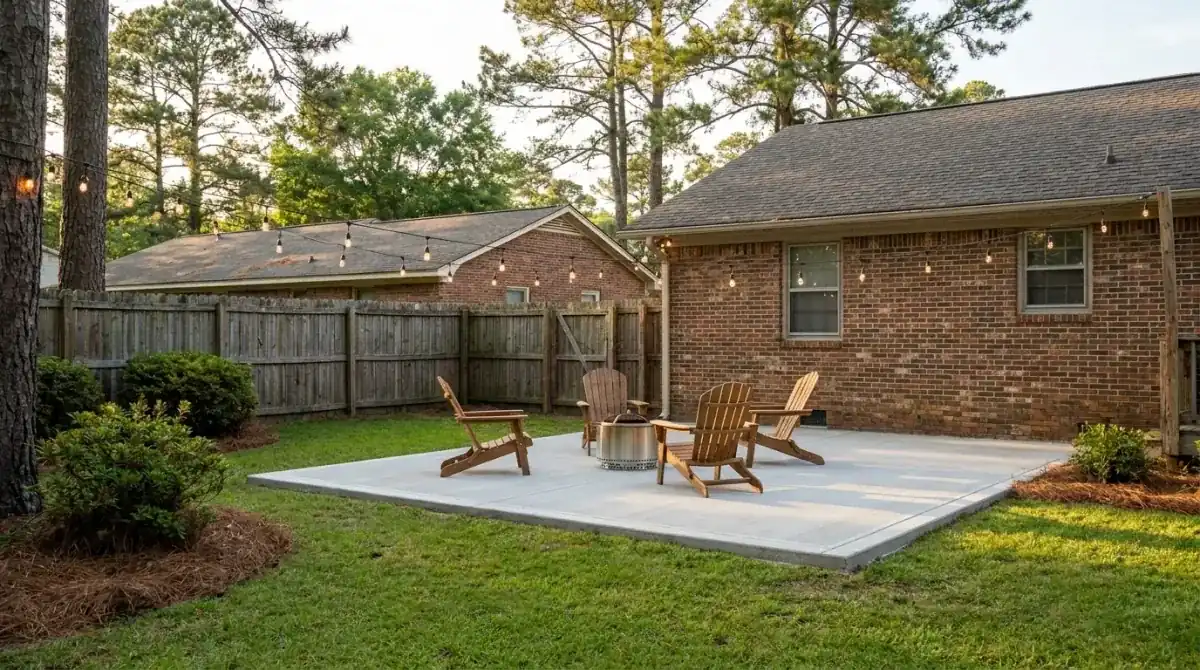
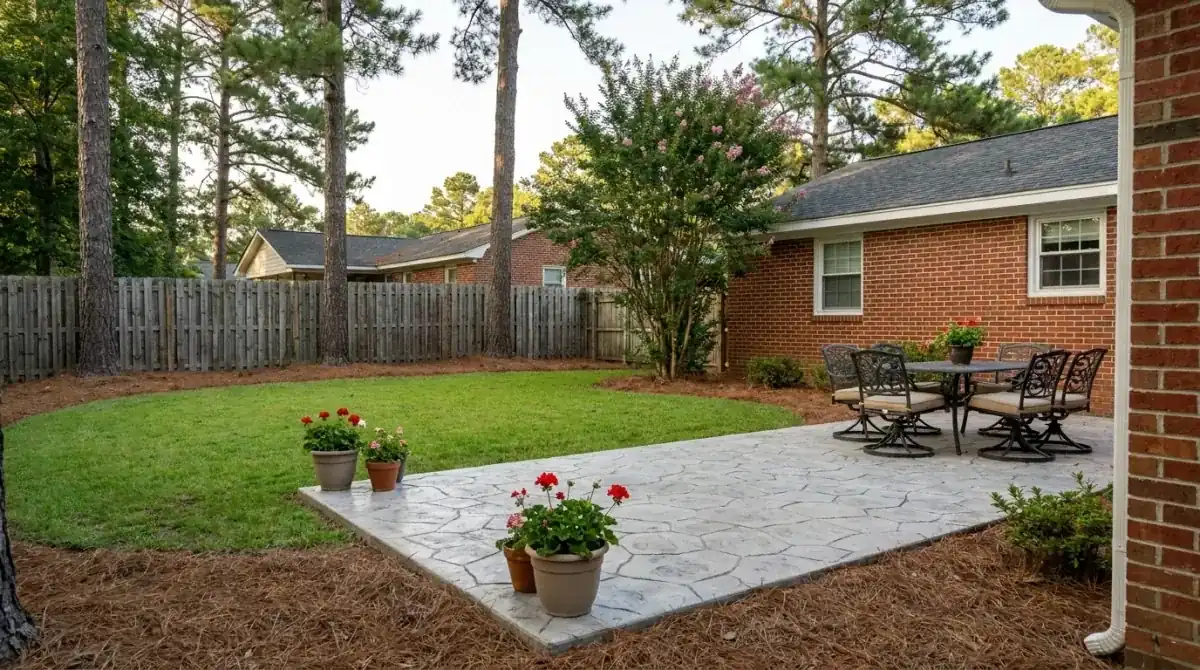
We price by the square foot: $8 to $14 for a broom or knockdown finish, $12 to $20 for stamped. A 600 to 800 sq ft surround runs $4,800 to $11,200.
| Job | Size | Per sq ft | What it comes to |
|---|---|---|---|
| Compact surround | 500 sq ft | $8 to $14 | $4,000 to $7,000 |
| Standard surround with a walk | 750 sq ft | $8 to $14 | $6,000 to $10,500 |
| Large surround with a lounge pad | 1,000 sq ft | $8 to $14 | $8,000 to $14,000 |
| Stamped surround | 700 sq ft | $12 to $20 | $8,400 to $14,000 |
Tear-out of an old slab, extra base on a filled lot, and truck or pump reach can move the total. Every price is confirmed in a free written estimate after we see the yard.