Northern Fayetteville: driveway width, curb cuts and Haymount
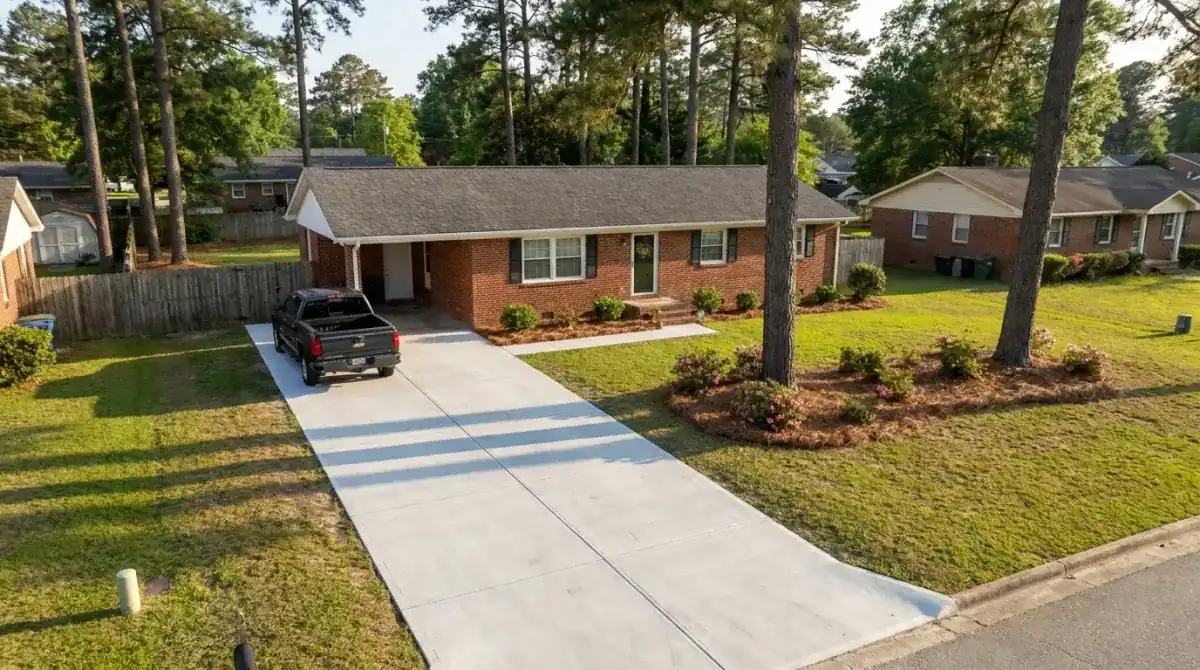
Wikipedia places the post and Pope Army Airfield in the northern part of the city of Fayetteville, so some off-post addresses are city lots. The city's unified development ordinance limits the first 12 feet of a residential driveway, measured from the street pavement edge, to 16 feet for a one-car garage and 24 feet for a two-car or larger garage, unless the city manager finds a wider apron is needed. New curb cuts need city manager approval before the building permit.
In Fayetteville, either the city or NCDOT maintains your street. On a state street, the city traffic engineer endorses the application and NCDOT gives final approval. Ask the city who owns your street before anyone saws the curb.
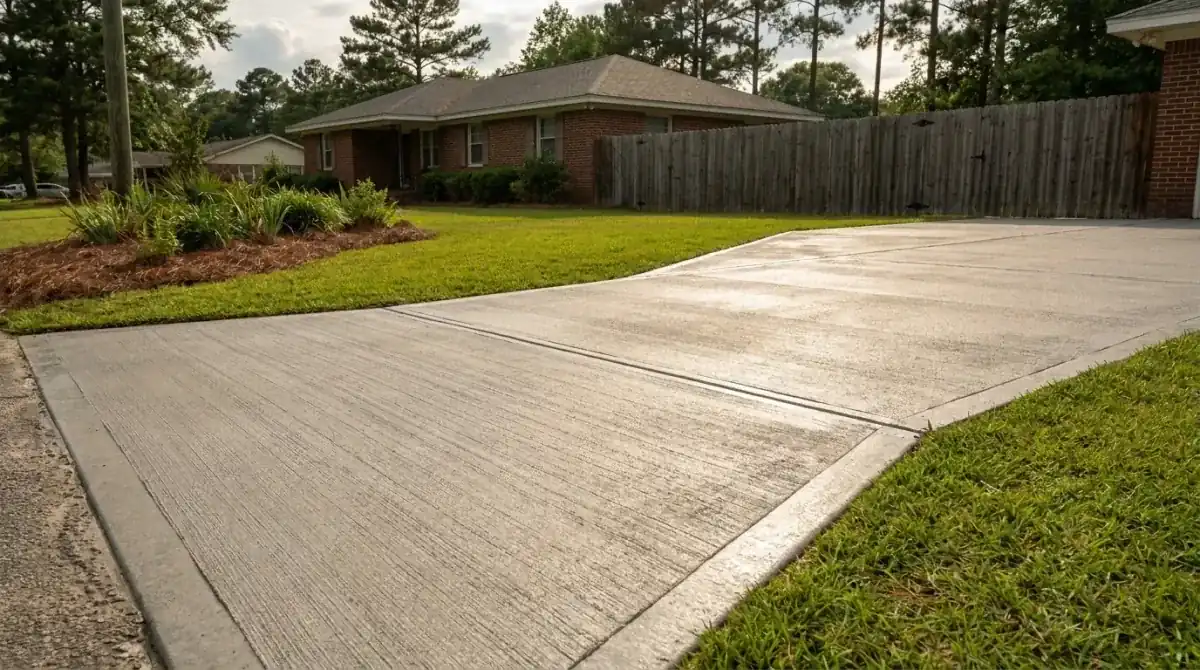
The Haymount Historic District, on the National Register (listed in 1983), runs roughly along Hillside Avenue from Bragg Boulevard to Purshing Street. The city's Historic Resources Commission reviews exterior changes in local historic districts and landmarks, and whether a driveway or walk needs a Certificate of Appropriateness is a question for the Planning Department. If your lot is in or near Haymount, call them. Our driveway page for the post area has the pour details, and the driveway service page covers thickness and finish.
On the Hoke and Harnett sides of the post
The post spans three counties, so an address next to it can land in a different county than you'd guess. A lot on the Hoke side goes to Hoke County Building Inspections, and the county says single-family plan review usually takes one to three working days and that the permit cost is doubled if work starts without the required permit. That doubling is why we never pour first and ask later.
On the Harnett side, Central Permitting handles Inspections, Planning, Fire Marshal and Environmental Health applications, with online permitting through its eTRAKiT system. Its published guides cover new homes, additions and modular homes, so a house addition with a new slab starts there.
Hoke's page says there are few exceptions to its building permit requirement, and Harnett's pages don't list a flatwork rule, so we'd rather you call than take our word. Bring your parcel number, tell the office what you plan to pour, and write down who answers. Send us what they said and we'll price the job with those steps in it. The slab page for the post area covers what goes under a garage or workshop floor if the answer turns out to be yes.
Move-out dates, rental turnovers and the schedule
More than 52,000 military personnel are stationed on the post, according to Wikipedia, and Corvias Property Management runs family housing on post under a privatized partnership with the Army. Corvias and the Army handle on-post housing, so this page is about the homes off post. Own or rent out a house off post? Then the calendar is yours to protect.
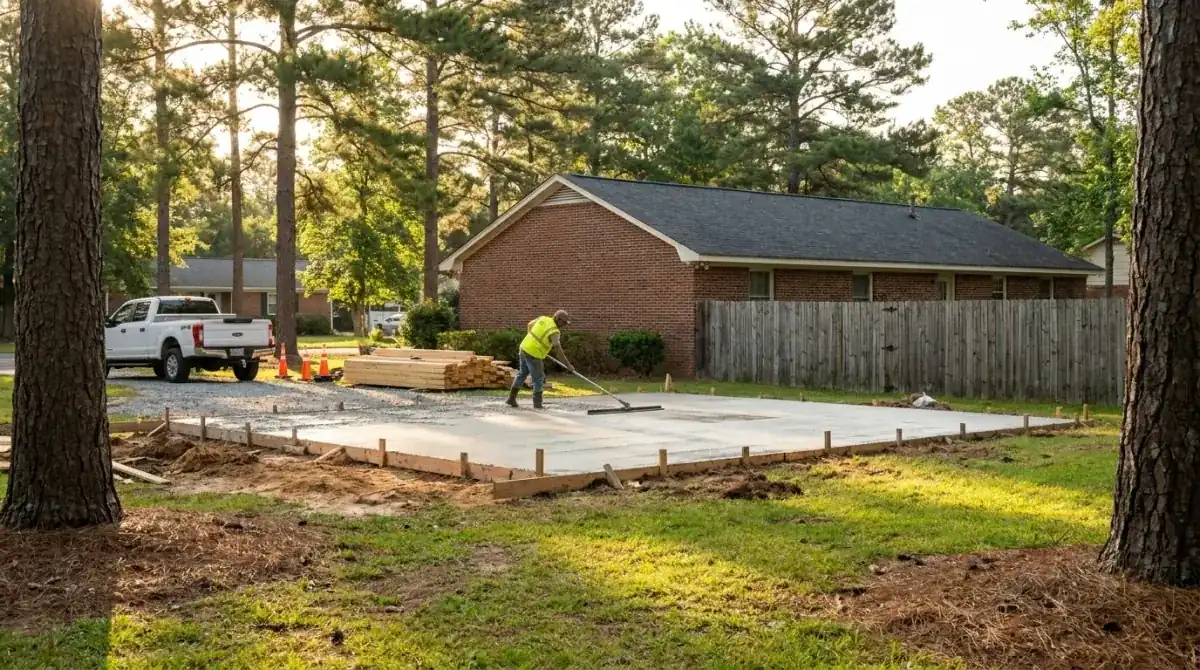
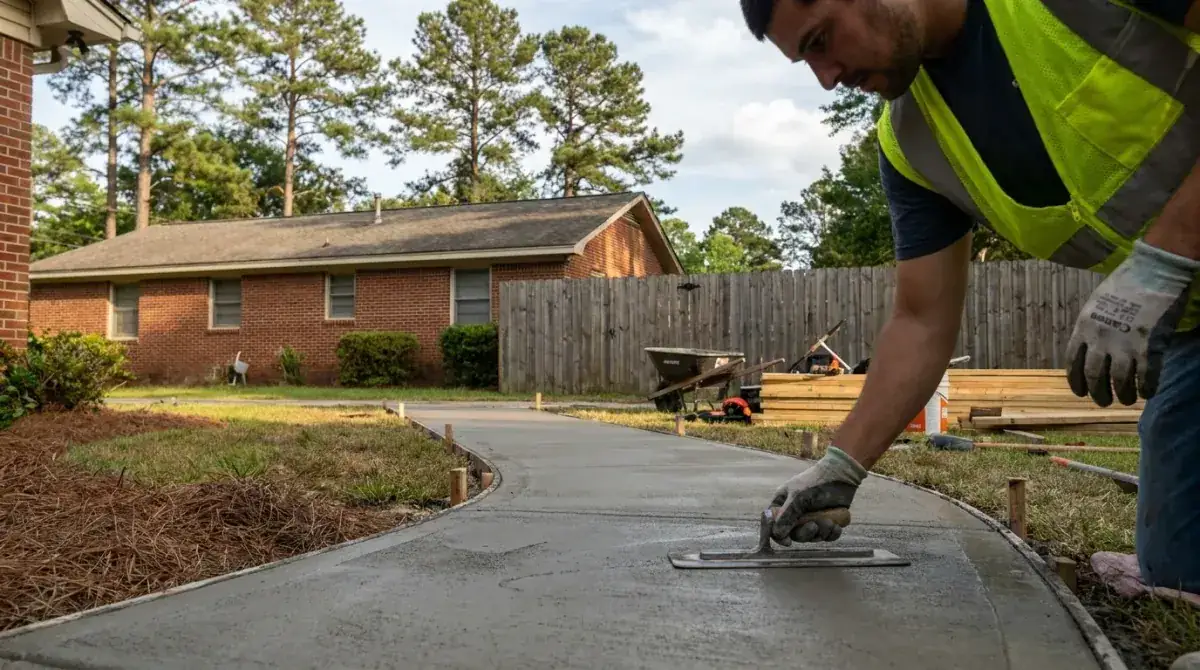
A pour has a few waits you can't skip. Forms get inspected where a permit applies, the concrete has to cure before it takes a car, and weather can move the day. Give us your closing date, your lease start or the day the moving truck shows up, and we'll tell you at the estimate whether the pour fits. A hard no in week one beats a soft maybe on moving day.
Take a rear patio. A 16 by 18 patio is 288 square feet, and at $7 to $12 per square foot that is $2,016 to $3,456. Stamped work runs $12 to $20 per square foot. The patio page for the post area goes further, and a free written estimate after we see the site confirms every figure.