Stedman Town Hall points you to Cumberland County
The town's Cumberland County page lists what the county provides: planning and inspection, with all permitting, planning, zoning, code enforcement and mapping. Stedman does have its own zoning ordinance, effective in 1987 and reprinted with amendments through 2015, but Cumberland County Planning and Inspections prepared it. The permit desk is in the county's Historic Courthouse in Fayetteville.
Stedman is small. It had 1,277 people in 2020, up from 1,028 in 2010, on 1.69 square miles along NC 24 about 11 miles east of the City of Fayetteville. A stagecoach station and post office came in 1841, the town incorporated in 1917, and it's named for Civil War Major Charles Manly Stedman. The Maxwell House is on the National Register.
None of that changes who issues the permit. Our permits guide walks through the county process, and your estimate names the steps for your lot.
A zoning permit even for a backyard shed
The town zoning ordinance, Section 12.321, requires a zoning permit from the zoning inspector before excavation or construction of any building or structure, accessory structures included. Permits are void after six months without real progress. Section 7.28 keeps accessory buildings out of required front and side yards and at least 15 feet from a side street line, 5 feet from any lot line that isn't a street line, and 5 feet from another building. An accessory building can't sit closer to the street than the main house does.
The county's accessory building checklists split by size. The zoning checklist is headed for projects less than 400 square feet or less than 12 feet in any direction. The building checklist, which adds a building permit, is headed for projects greater than 400 square feet or longer than 12 feet in any direction. Both want a plot plan, and parcels of one acre or more have to meet the NC DEQ erosion and sediment control paperwork. A 20 by 24 workshop is 480 square feet and longer than 12 feet both ways, so it lands on the building side. Those headings overlap at the edges, so confirm your size with the county before you buy materials.
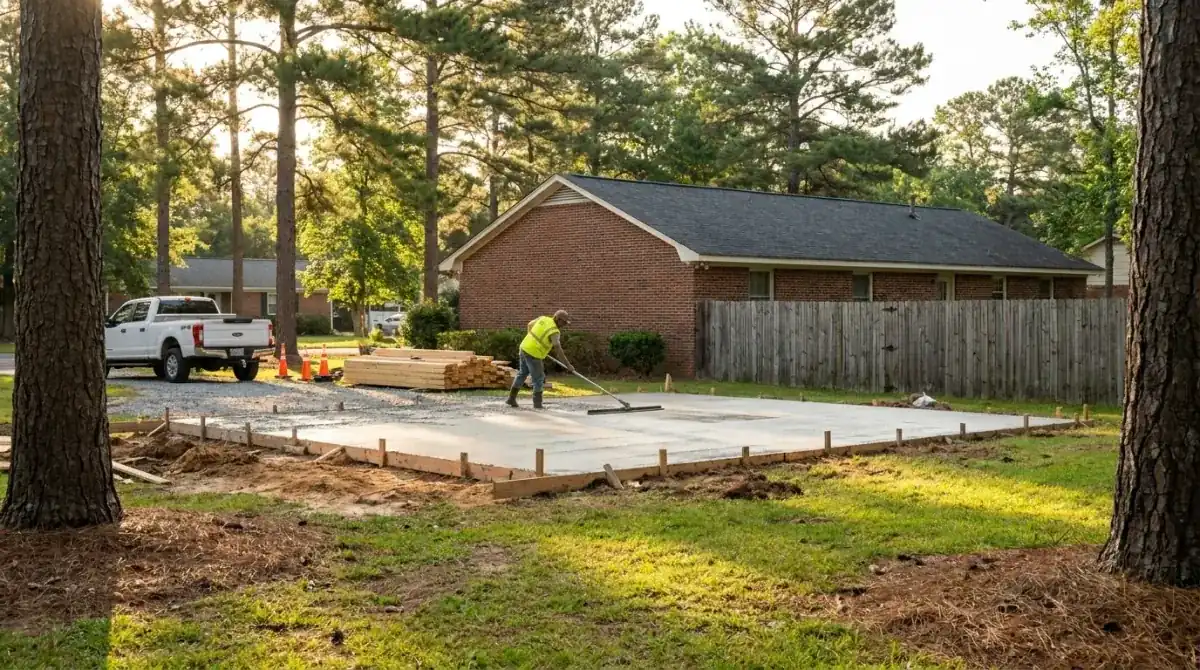
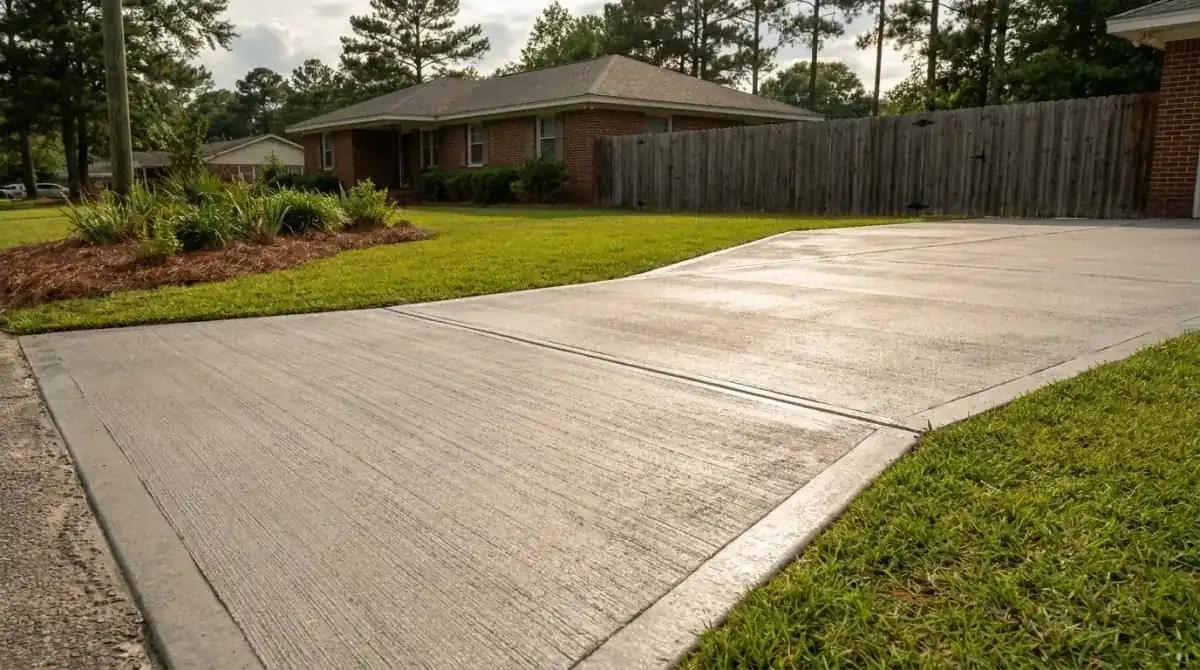
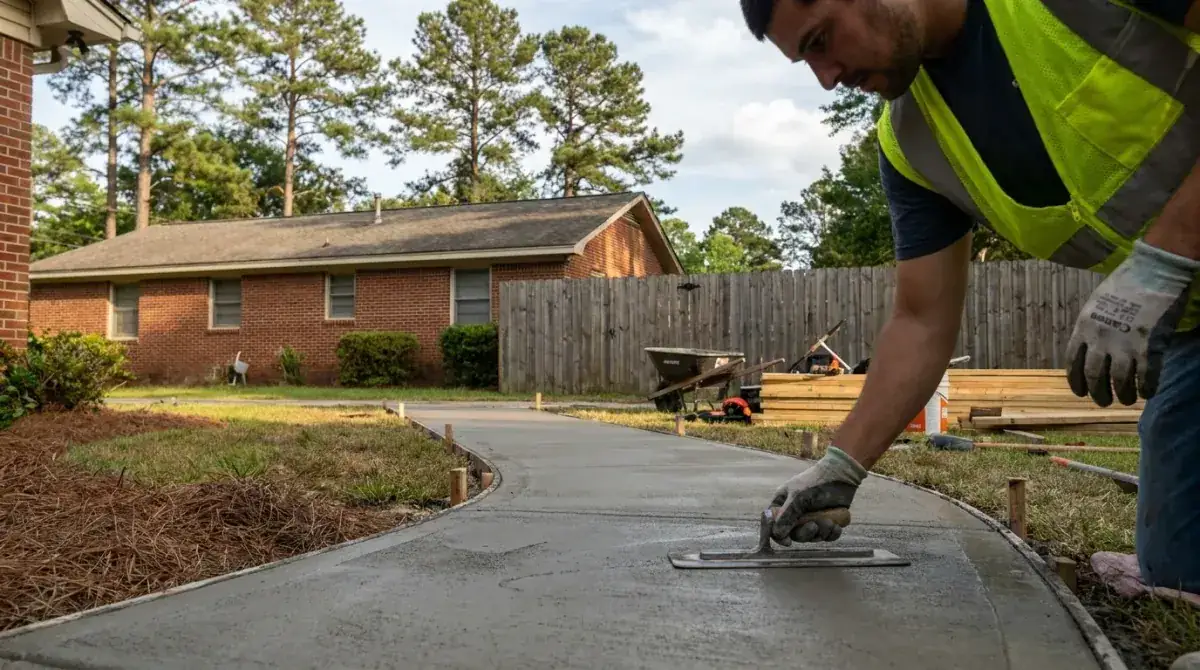
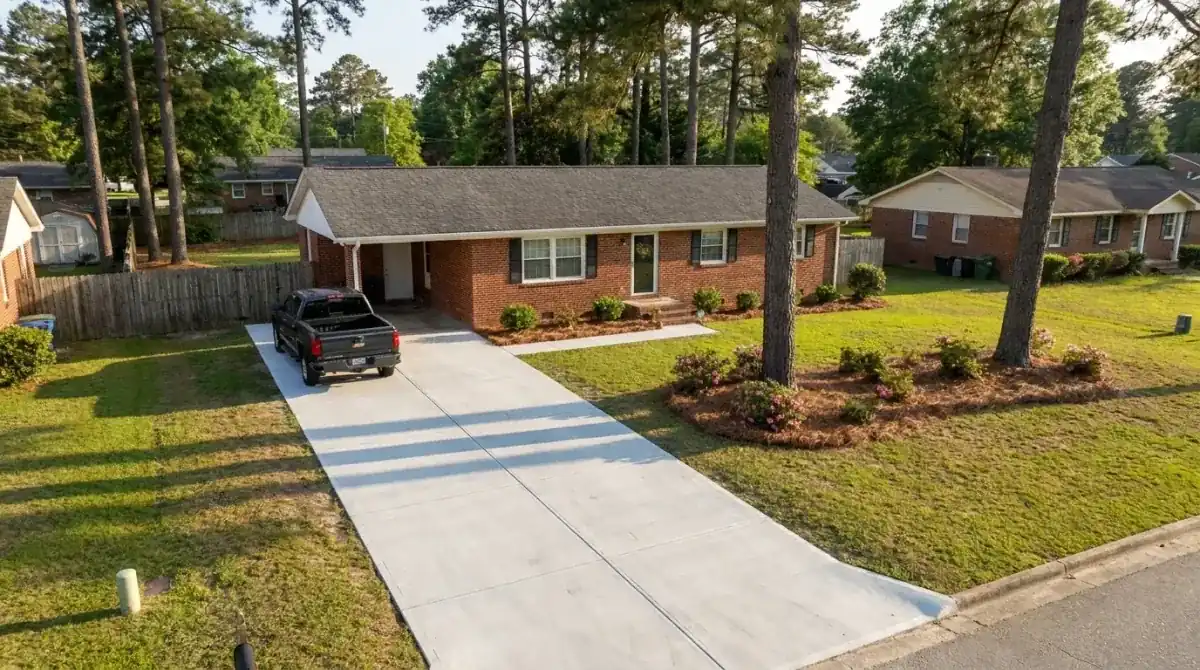
Whether plain flatwork like a driveway or walk needs a building permit is the county's call. Bring us the answer. The Stedman slab page covers the pad itself.
Goldsboro, Rains, Johnston: soils that hold water
Stedman's ground is a long way from the well-drained sands under the Town of Hope Mills or the Town of Spring Lake. Of 30 spots in town, 11 were Goldsboro loamy sand, 7 were Rains sandy loam, 6 were Norfolk loamy sand, 4 were Johnston loam and 2 were Lynchburg sandy loam. Twenty-four of the 30 were Goldsboro, Rains, Johnston or Lynchburg, which range from moderately well drained to very poorly drained.
NRCS describes Goldsboro as a fine-loamy, moderately well drained soil with moderate permeability. The word Aquic in its name means seasonal wetness. So a slab here can sit on ground that stays damp part of the year. That changes the plan. We look at where water collects, set the grade so it leaves, and build a firm, well-compacted base.
Norfolk is well drained, so one lot can be dry while the neighbor's is soft. We probe both, and the written estimate lists what we found and what the base will be.