What sand does to a slope, and why the build has to answer it
Cumberland County's big soils are sandy, and sand fails a slope its own way. The NRCS series descriptions for Lakeland and Wagram describe deep sand and loamy sand that drains fast. Water runs through instead of sitting, carries fine sand with it and undercuts whatever stands in the way. A concrete retaining wall in Fayetteville has to hold the slope and keep the sand where it is.
The rain comes hard, too. The airport's 1991 to 2020 normals show 44.58 inches a year, with August the wettest month at 5.36 inches, and 11.3 days a year with an inch or more. A structure that works on a dry Tuesday has to work on one of those days.
So we start every job with two questions: what's the slope holding, and where does the water go when it rains an inch? The pieces below answer them for this ground.
Poured, block or big precast: picking the build
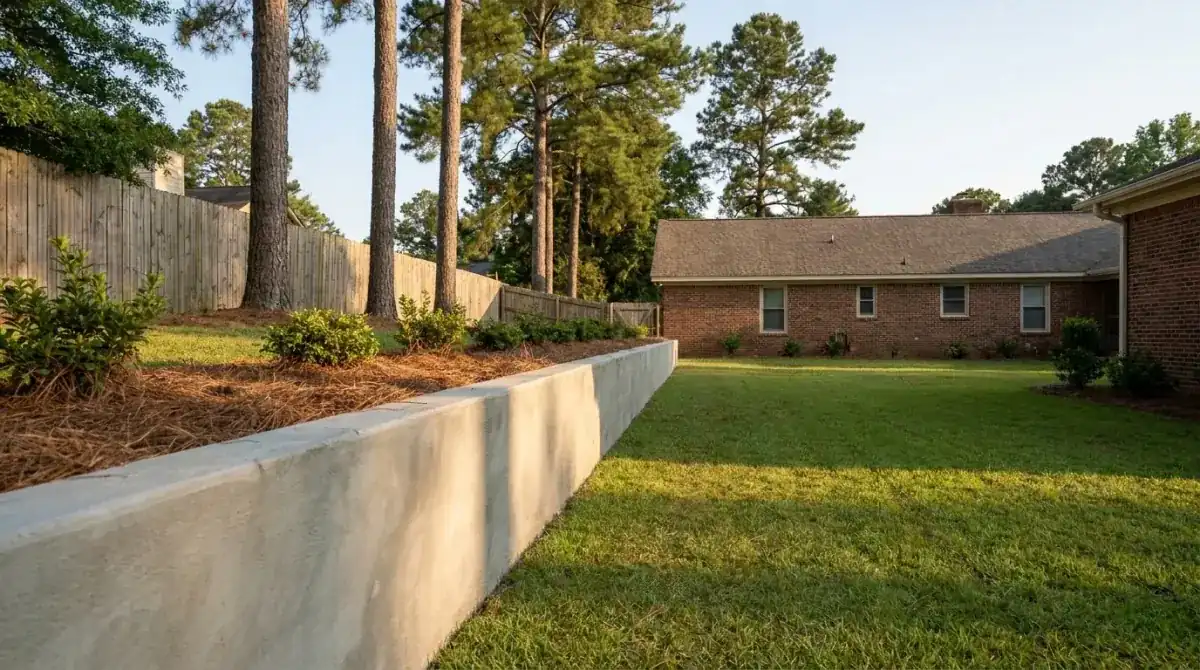
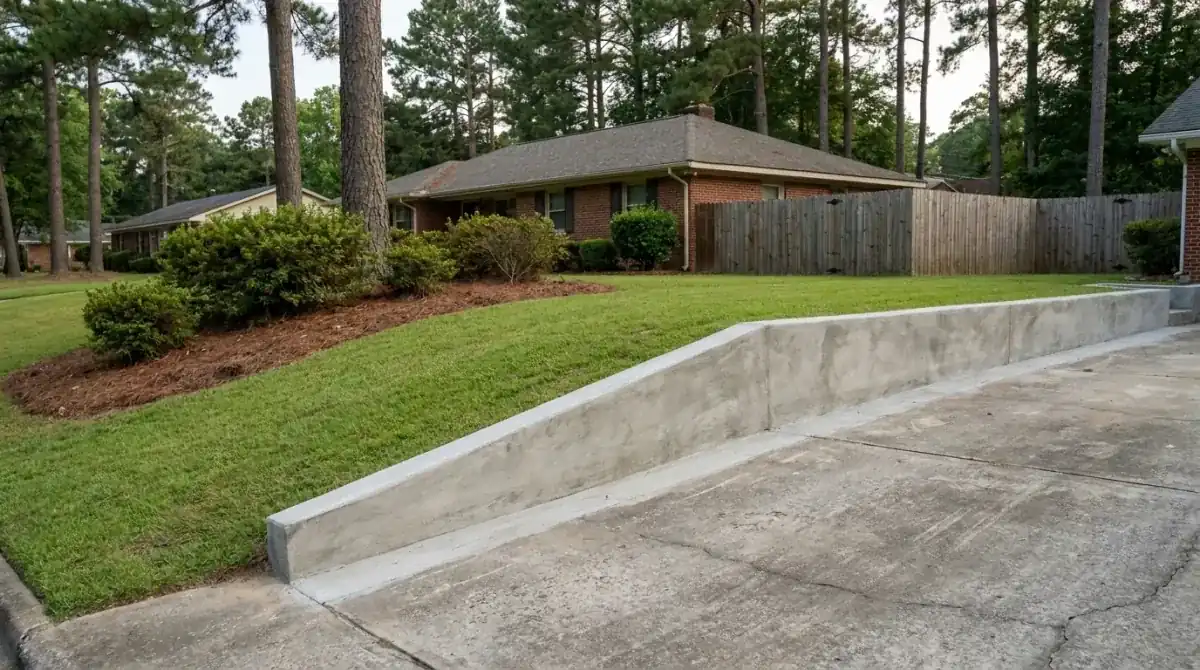
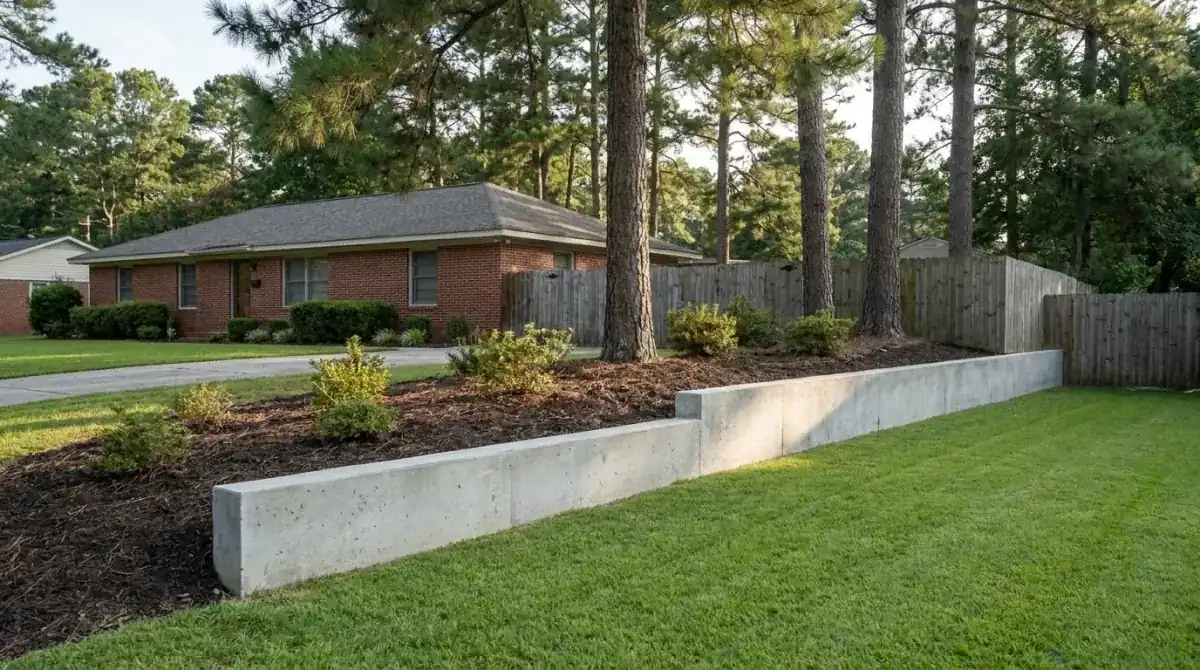
Concrete retaining walls in Fayetteville come in two builds on a house lot, and we price both. A poured concrete one is formed on site with steel inside, cast along its whole run, and it gives a clean face you can leave plain, stain or cap. A block one is stacked from concrete masonry units with steel and grout in the cores, or from segmental blocks that interlock without mortar. It goes up in courses, curves more easily and can take a veneer. Our standard pricing covers either build up to about 4 feet of face. Anything taller is engineered and priced per design.
Shopping for large concrete retaining wall blocks? Then you've seen the big precast ones, sometimes sold as ecology blocks. Those stack quickly with a loader and suit bins, lot lines and utility yards. They're a different animal from a finished face beside a patio or a driveway, and the right pick depends on height, looks and what sits above. Tell us what you're holding back and we'll say which build we'd price.
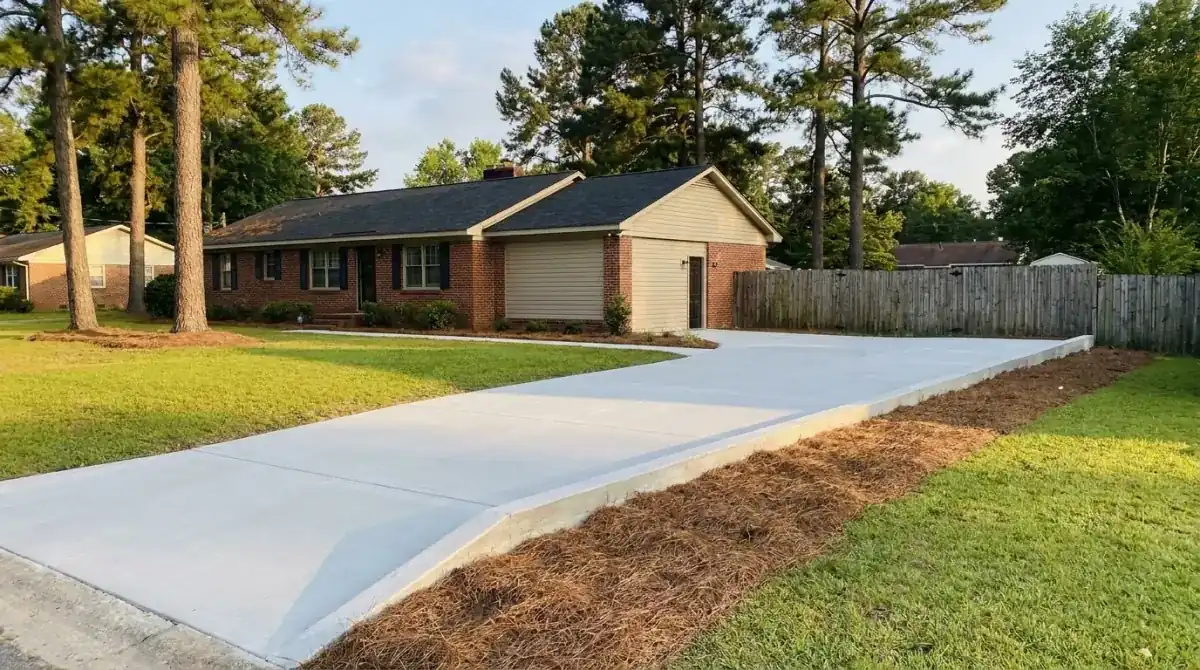
A seat wall at the edge of a patio is a short one with a cap, priced the same way by the square foot of face. If it will hold a driveway or a slab, we want to know before we set steel, because the load behind the face decides the design.
Tiered walls for a steep lot
A steep bank is sometimes better held by two or three shorter walls than one tall one. Tiered walls leave planting terraces between the steps and keep each wall's face low, which spreads the load down the slope. We build tiers in poured or block, price each one by its square feet of face, and plan the drain behind every tier so the upper wall's water has somewhere to go. Bring your planting plan to the visit and we'll set the terrace widths to fit it. Whether stacked tiers count as one wall for review is a question for the permit desk, so we ask before we quote.
Concrete retaining walls in Fayetteville price by the square foot of wall face, and ours runs $25 to $45. Poured or block up to about 4 feet is in that range; taller walls are engineered and priced per design.
| Wall | Size | Per sq ft of face | What it comes to |
|---|---|---|---|
| Garden or seat wall | 20x2.5 ft (50 sq ft) | $25 to $45 | $1,250 to $2,250 |
| Yard wall | 40x3 ft (120 sq ft) | $25 to $45 | $3,000 to $5,400 |
| Taller yard wall | 60x4 ft (240 sq ft) | $25 to $45 | $6,000 to $10,800 |
| Wall over about 4 ft | Engineered | Per design | Priced after the drawings |
Math is wall length times face height. Footing depth, drain stone, stairs through the wall, steep access and veneers move the number. We give a free written estimate after we see the site.
Drainage behind the face: stone, pipe and a place for water to go
The job isn't done until the water has a way out. Behind every one we build goes a layer of washed stone, filter fabric and perforated pipe that runs to daylight or a safe outlet. Weep holes through the face give a second path. The fabric keeps sand from washing into the stone and clogging it, which is the problem in this ground.
Where the pipe lets go matters as much as the pipe. The City's stormwater code lets some small projects skip stormwater control, but the exemption still says work may not divert water onto a neighboring property to cause damage. A wall that sends your runoff onto the lot next door shows the flaw the first time it rains, and that's a poor way to meet the neighbors.
Downspouts count too. If your roof water lands at the top of the slope, it goes behind the face and not past it. We mark where gutters empty on the walk-through and tell you whether to extend a downspout or send it to a separate outlet. Set up right, the wall solves a drainage problem instead of making one: a drain behind, a swale in front, and the water goes where you want it.