How concrete contractors in Hope Mills work with Public Works
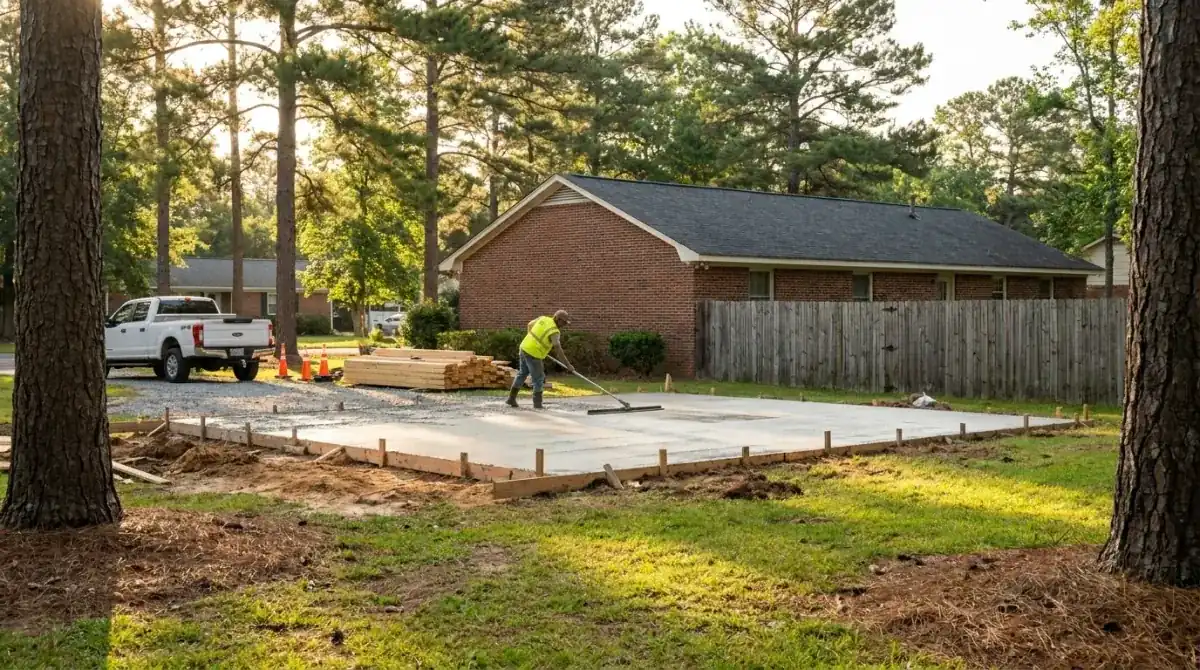
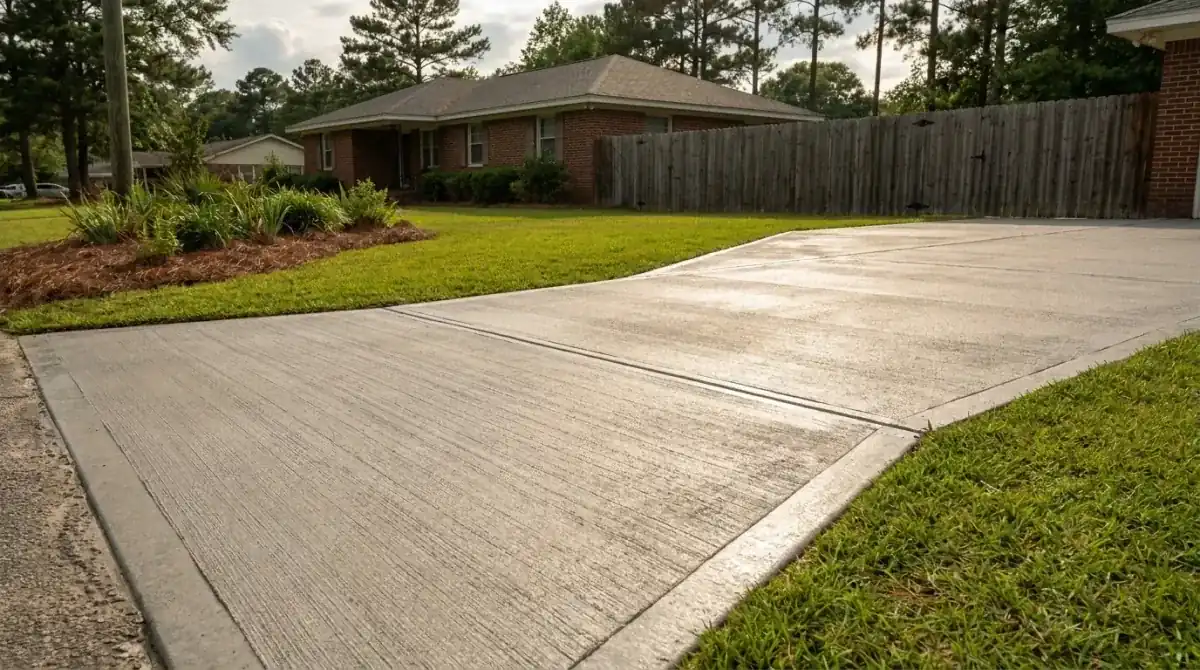
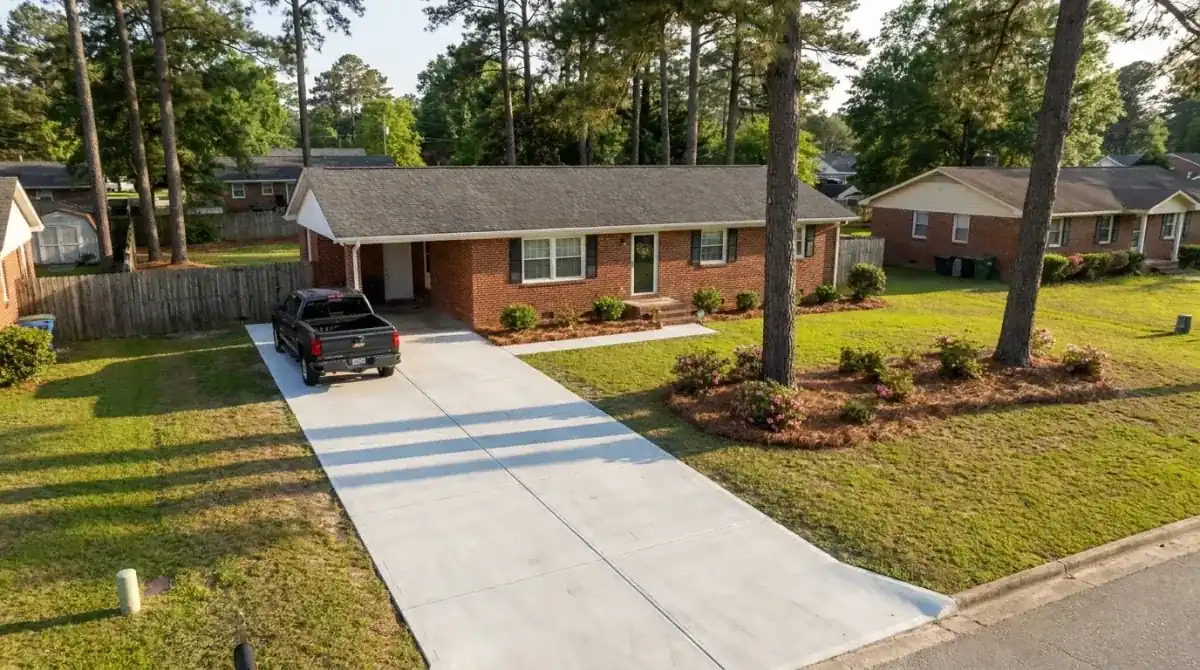
Public Works handles driveway permits in Hope Mills, and the rules are posted on the town's driveway permit page. It covers a brand new driveway and any work on an old one, like paving over gravel or dirt. On a residential lot the driveway can be no wider than 24 feet, and the first 20 feet back from the street connection has to be a hard surface, asphalt or concrete.
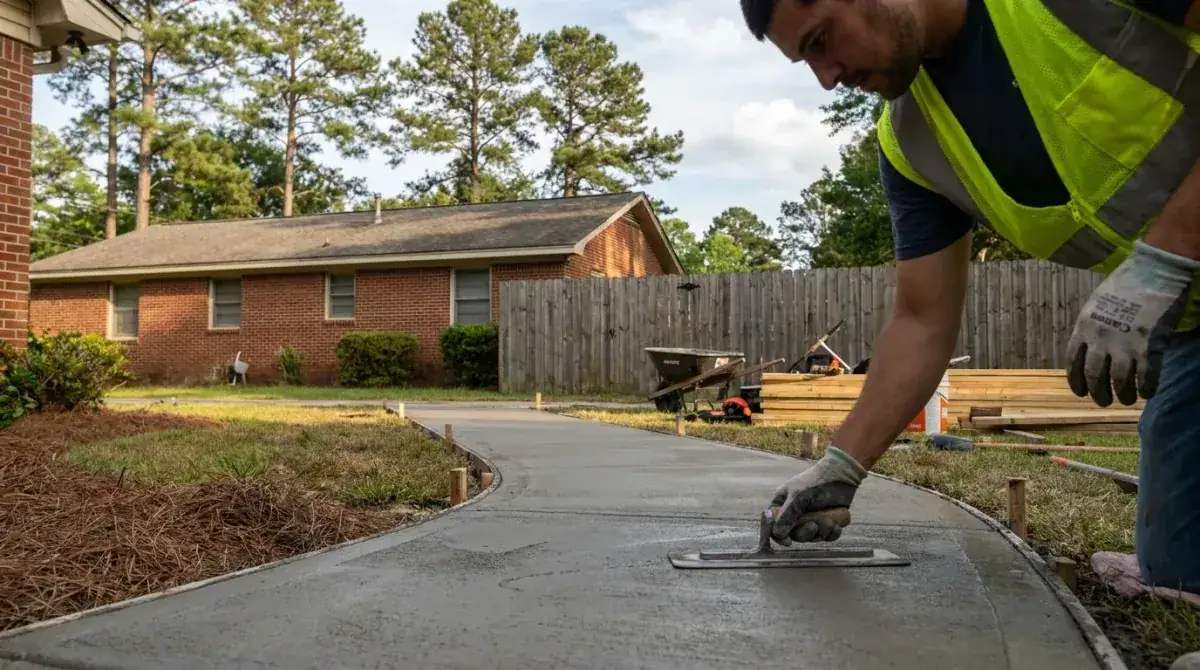
If your plan removes any curbing, Public Works has to look at the site and approve it before the permit is issued. Then a Public Works representative is on site while the crew works, and the town wants at least 24 hours of notice to schedule that inspection. Either you or the contractor can pick up the permit. You should hear all that before you sign. So we walk the lot with the 24 foot cap in mind, and if your sketch runs wider, the estimate says so. The full countywide rundown sits in our concrete permits guide, and the driveway page for the town covers the pour itself.
Town street or state road: who owns the curb on your block
Some streets here aren't the town's at all. If your driveway meets an NCDOT-maintained road, the town sends you to the NCDOT district office for a driveway permit instead, and the town points residents to an NCDOT public street map to check who maintains a given street. Do that check before anyone orders concrete, or the job can stall.
The schedule is where this bites. Small, simple state driveway requests are typically processed in four weeks or less after formal submittal, and complex ones can take eight weeks or more, according to NCDOT's driveway permit FAQ. A town street runs on the 24 hour Public Works notice instead. Same lot size, very different calendar.
The town's right-of-way permit page matters too, and concrete contractors in Hope Mills check it. New driveway connections and any change to roadside drainage, like piping a ditch or replacing a driveway culvert, are on its list. If you're not sure which bucket your job falls in, call Public Works before the forms go up. Work in the right-of-way without a permit can be stopped and removed at the owner's or contractor's expense, and nobody wants to pay for the same apron twice.