Fitting a pattern inside the 24 foot cap and the 20 foot apron
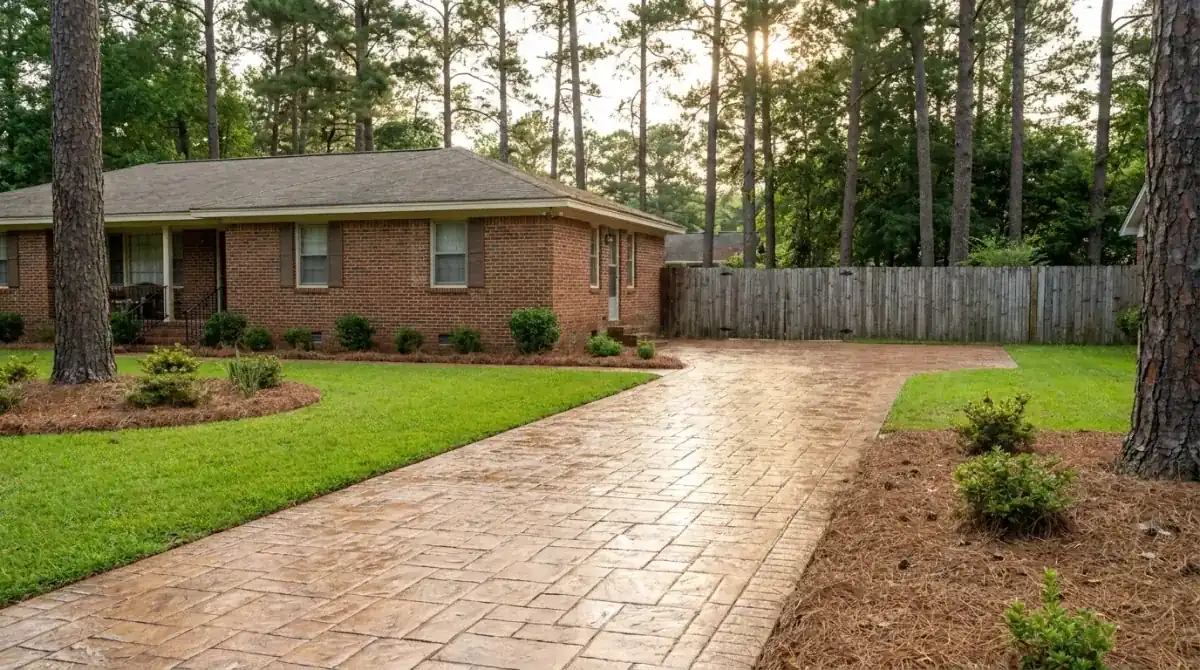
The town spells out two driveway numbers on its driveway permit page. A residential driveway can be 24 feet wide at most, and the first 20 feet from the street connection must be a hardened surface, either asphalt or concrete. A patterned slab is poured concrete, so it meets the apron rule. The 24 feet is your design box, and inside it we draw a field pattern with a contrasting border and a plain broom-finished strip where the tires roll.
The driveway permit is a town form you apply for at Town Hall, and Public Works inspects while the work is under way, booked at least 24 hours ahead. We cover how that works on our Hope Mills driveway page. The layout is where the design gets decided: where the border runs, where the joints fall and how the pattern meets the street edge. Settle those lines on paper before the forms go up, and keep a copy of the permit and the approved sketch with your records.
Creek, lake and floodway: patterned slabs on wet-edge lots
The town's lake sits behind a dam on Little Rockfish Creek, beside the town center. Federal flood maps checked at 30 random points inside the town limits put 27 in minimal-hazard Zone X, one in the 0.2 percent annual chance zone and one in a regulated AE floodway. One point returned no result. That's a sample, not a ruling on your parcel. Look up your address on the NC flood risk lookup before anyone adds fill or changes grade for a new patio.
Water that leaves your yard has its own rules. The town's Stormwater Department posts permits and forms for development, and erosion or sediment problems go to the state's STOP MUD hotline. On a sloped lot, a textured surface needs a deliberate fall to carry rain off. Roof water goes onto your own grass, never across the pattern. On a lot that sits low, tell us before the estimate walk and we'll mark the drain path on the sketch. The sealer matters here too. It keeps splashes and standing water from soaking into the surface and dulling the color, and we tell you up front how recoating works for your pattern.
Pattern work runs $12 to $20 per sq ft with color and sealer included. Each size below is that range multiplied out.
| Project | Size | Per sq ft | What it comes to |
|---|---|---|---|
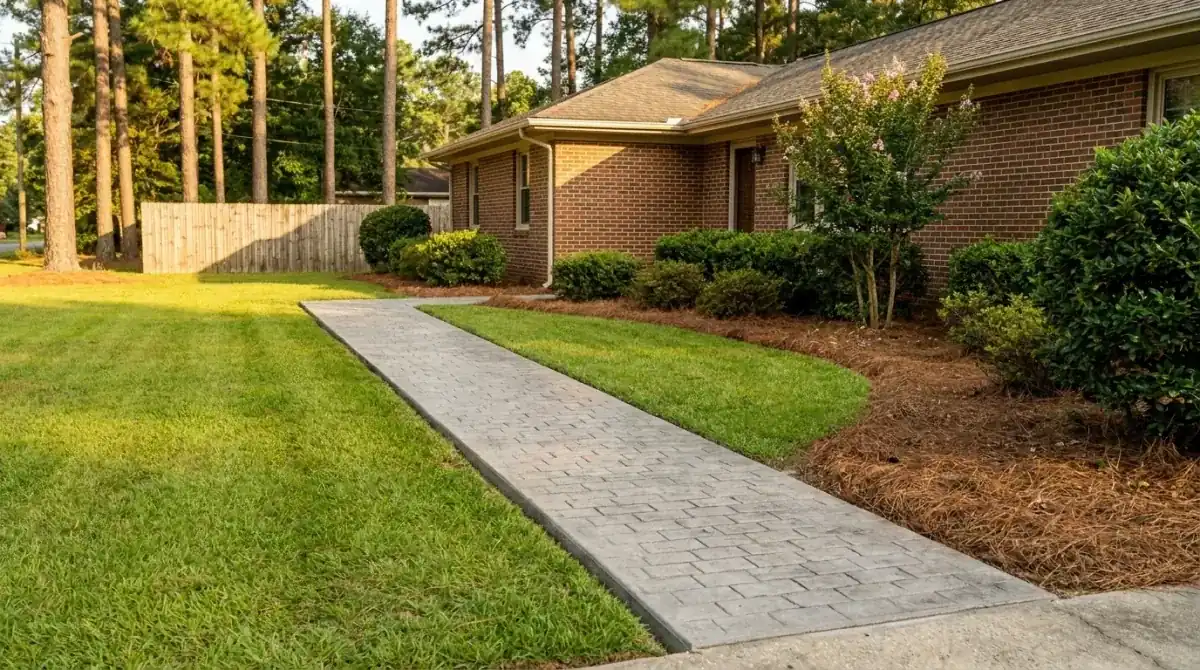
| Front walk and landing | 4x30 walk (120 sq ft) | $12 to $20 | $1,440 to $2,400 |
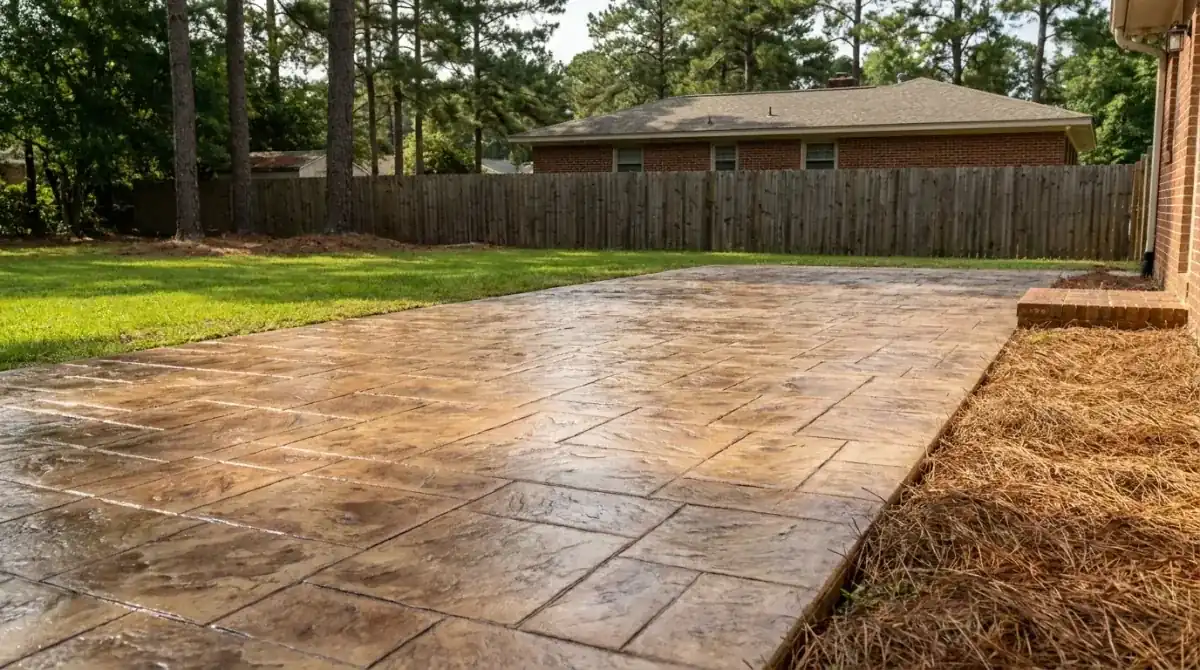
| Back patio | 12x20 (240 sq ft) | $12 to $20 | $2,880 to $4,800 |
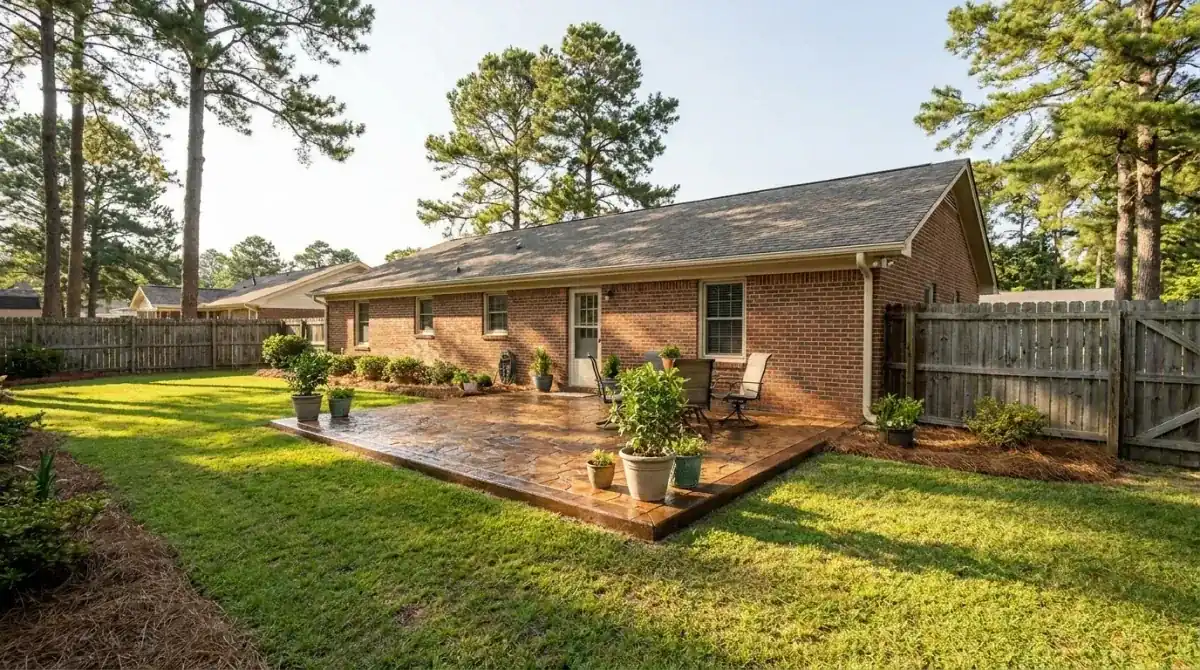
| Patio with a seating area | 300 sq ft | $12 to $20 | $3,600 to $6,000 |
| Parking pad inside the 24 foot cap | 20x24 (480 sq ft) | $12 to $20 | $5,760 to $9,600 |
A pour near the street adds the town's permit steps, and a low lot near the creek may need extra base. Both are quoted line by line. We give a free written estimate after we see the site.