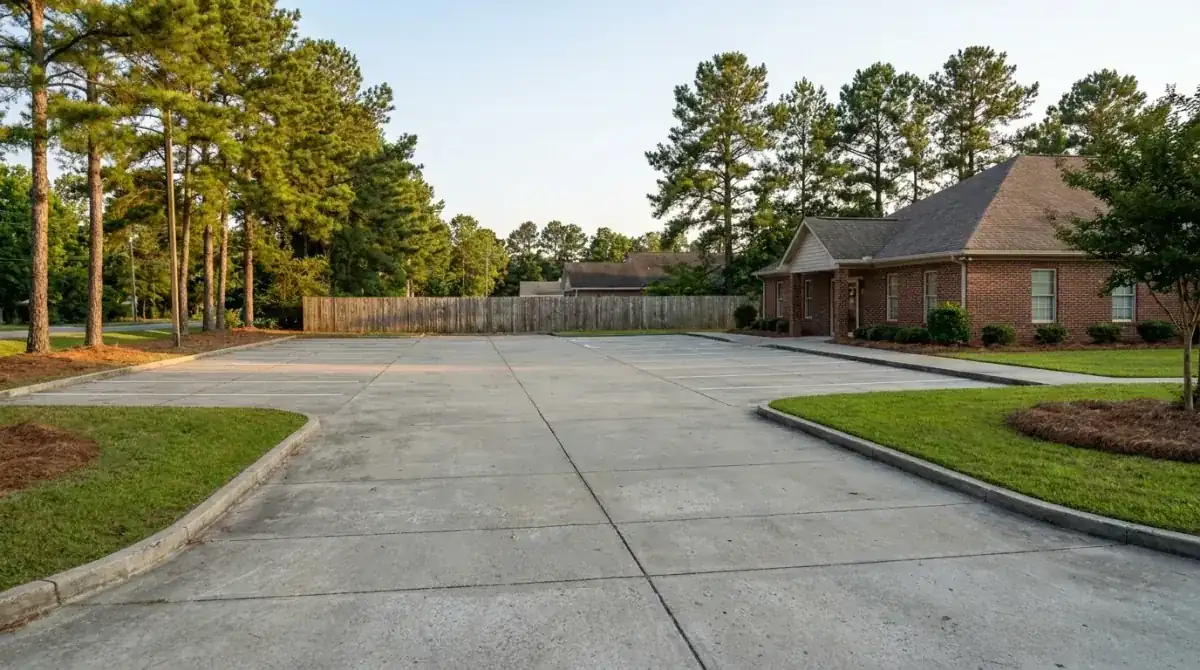
Inspections, Planning and Public Works: three desks, one lot
The town runs its own permitting, and a business project can touch three offices. Building Inspections & Permitting issues residential and commercial building permits and enforces the North Carolina State Building Code. Zoning permits come from the Development & Planning Department. Driveway and right-of-way work belongs to Public Works.
The town adopted its Zoning Ordinance in August 2025 and its Subdivision Ordinance that October, so older advice about setbacks may be out of date. Section 102A-107 requires a zoning permit before you start any building or structure, accessory ones included, and the permit goes void after six months without real progress. If your parcel sits in the Municipal Influence Area, you have to meet the town's development standards and the county's zoning both. Start at the town inspections page, then read our permit guide for the order.
Applications start at Town Hall, where the permitting office sits in the lobby. Driveway cuts go to Public Works, and zoning permits are a separate stop with Development & Planning.
The commercial driveway form and the Public Works curb check
The town publishes a Driveway Permit form, and the commercial version carries a $200 fee. The permit covers new construction and improvements to an existing driveway, and its purpose is drainage from your pavement into the town-owned street. Any change that removes existing curb needs a site inspection and Public Works approval before the permit is issued.
Then the inspection follows your crew. A Public Works representative has to look at the work while it's under way, and the contractor must give 24 hours of notice before the forms are poured. If you skip the permit, the town can stop the work and have it removed at the owner's or contractor's expense. If the street in front of your lot is state-maintained, the driveway needs an NCDOT permit from the district office instead, and the town points owners to an NCDOT street map to check who maintains what. Do that check before you sign a bid, not after.
Plan the order: curb approval, driveway permit, forms inspected, pour. Missing a step costs a day or more, and a scheduled truck costs money while it waits.
Flatwork runs $8 to $14 per sq ft for a reinforced 5 to 6 inch slab, priced per job after a site visit. These sizes multiply out from that range.
| Job | Size | Per sq ft | What it comes to |
|---|---|---|---|
| ADA landing and ramp pad | 8x10 (80 sq ft) | $8 to $14 | $640 to $1,120 |
| Dumpster pad | 12x12 (144 sq ft) | $8 to $14 | $1,152 to $2,016 |
| Curb-side walk | 5x100 (500 sq ft) | $8 to $14 | $4,000 to $7,000 |
| Parking bay | 24x60 (1,440 sq ft) | $8 to $14 | $11,520 to $20,160 |
Curb removal, a Public Works inspection, extra stone on sandy fill and tear-out of an old surface can move your total. Every price is confirmed in a free written estimate after we see the site.
Hope Mills Lake, Little Rockfish Creek and the floodway sample
Hope Mills Lake sits behind a dam on Little Rockfish Creek, right beside the town center. Memorial Day rain in 2003 washed out the old earthen dam, and a $9.8 million concrete dam was finished in 2008. It's a fair thing to weigh if your lot backs up to the creek.
The flood numbers are friendlier than the history. In a sample of 30 points inside town, 27 landed in minimal-hazard Zone X, one in the 0.2 percent annual chance zone, and one in a regulated Zone AE floodway. A sample isn't a parcel answer. If you're near the lake or creek, check the address in the NC flood risk lookup before any fill or grading. The town's Stormwater Department posts its permits and forms, and erosion problems on a job site go to the state's STOP MUD hotline.
The town's Stormwater Administrator is the contact for development permits tied to grading, so a lot that changes drainage to the street or creek should ask there before the forms go in.