Faceville loamy sand and a well-drained town
Raeford's ground drains well, and it shows in the soil survey. At 60 random points in the USDA soil survey, Faceville loamy sand took the biggest share, 28 points counting its 0 to 2 percent slope and its urban-land variant. Wagram, Duplin sandy loam, Blaney and Lakeland-Urban land made up the rest. Faceville and Wagram are well drained, and the survey rates both as not limited for a dwelling without a basement.
That's good news for a backyard slab. Eastover's sample turned up wet bottomland; Raeford's sample points don't show that, so base work comes down to compaction rather than stone and drainage. Two cautions apply. Blaney on an 8 to 15 percent slope sits in a slower-soaking hydrologic group and rates more limited than Faceville, so a sloped lot needs a firm grade. And the "Urban land" tag means fill and past disturbance, so on a lot that has been built on before we probe the pad area before pricing it.
City hall, Hoke County or both: who signs off
Raeford is the Hoke County seat on US 401, and its permit picture has layers. City Hall lists a Code Administration department that covers code enforcement, planning, zoning and building inspections. The Hoke County Building Inspection Department and County Planning handle the county side. County Planning administers zoning for unincorporated areas only, and the county ordinance leaves out land inside any town's extraterritorial area, so county rules don't decide what a lot inside the City of Raeford needs.
So the first question is which side of the line your house sits on. Inside the city limits, call City Hall and ask its Code Administration office what a backyard pad needs before you book. Outside the city and its extraterritorial area, the county steps below apply. The courthouse and the county permit desks are in town too, so a rural Hoke address still ends up at an office in Raeford. The permits guide explains how the neighboring Cumberland County offices compare.
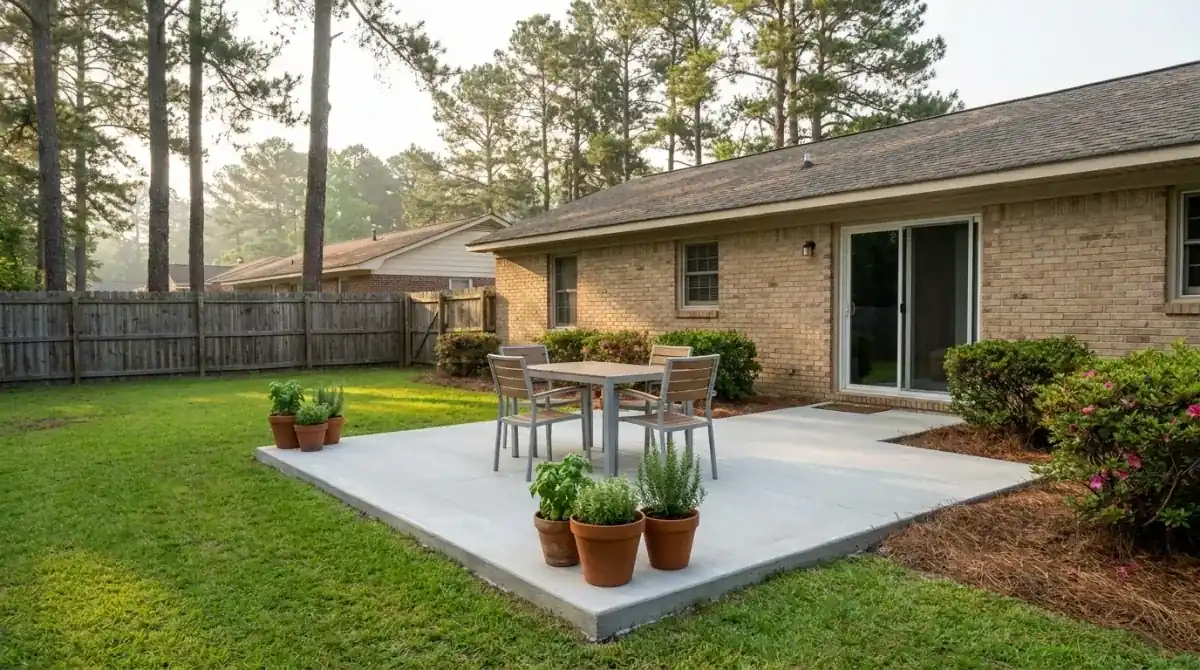
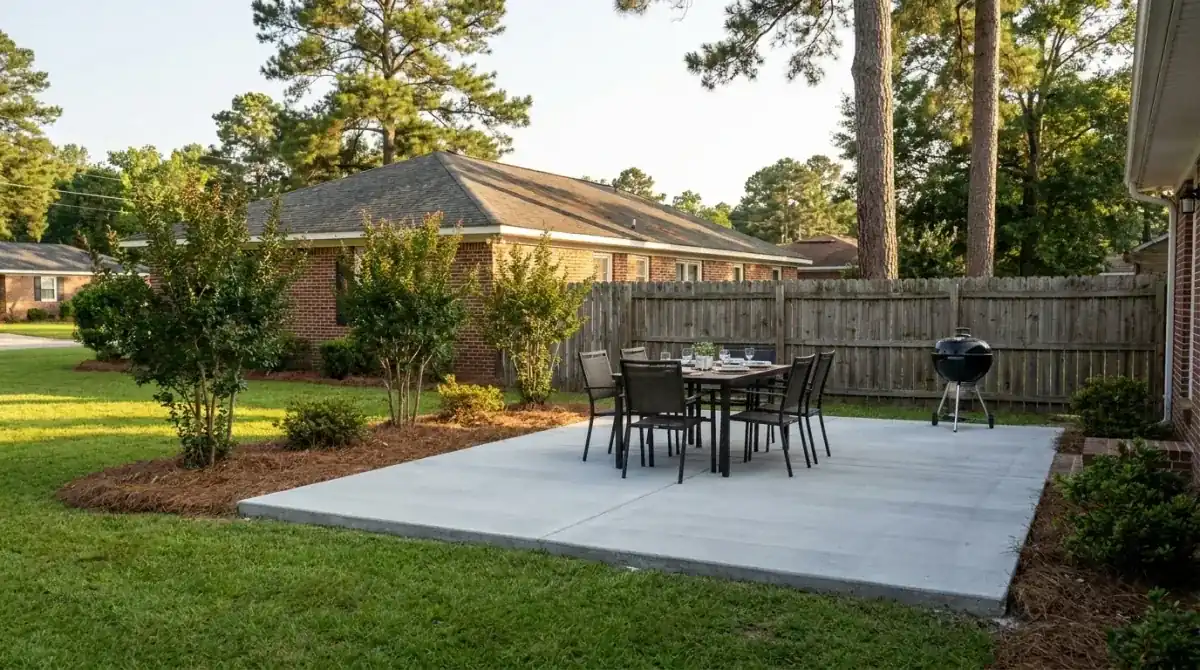
Backyard slabs are priced by the square foot, $7 to $12 per sq ft for plain or broom finish, and stamped runs $12 to $20. These sizes come straight from those ranges.
| Project | Size | Per sq ft | What it comes to |
|---|---|---|---|
| Grill pad at the back door | 10x12 (120 sq ft) | $7 to $12 | $840 to $1,440 |
| Table and chairs | 16x16 (256 sq ft) | $7 to $12 | $1,792 to $3,072 |
| Long entertainer pad on a roomy R-20 lot | 14x20 (280 sq ft) | $7 to $12 | $1,960 to $3,360 |
| Stamped pad | 12x14 (168 sq ft) | $12 to $20 | $2,016 to $3,360 |
Small pads can hit a job minimum. Slope, base work, steps and a seat wall move the number. We give a free written estimate after we see the site.
Outside the city: Hoke County's three steps and the plot plan
For a house in unincorporated Hoke County, the county's residential permit page lays out three steps. Environmental Health comes first for septic, and it's skipped on public sewer. Next is a Zoning Permit from Planning, which asks that the project meet the zoning setbacks and not sit in a flood zone, wetland or easement. Last is the Building Permit from Building Inspections. A plot plan shows the lot, the buildings and the location and size of parking and driveways.
The zoning permit rule says no land is used and no building is built, moved or structurally altered until the permit is issued, and the permit goes void if work doesn't start within 180 days. Whether a ground-level pad falls under that rule is the office's call. Ask, and bring a sketch. A pad drawn on a copy of your plot plan answers half of their questions before they ask them.